Inside Amish One-Room Schools: Why Education Ends at 8th Grade
By Best of Lancaster · Updated July 2026
Independently researched — we verify hours, prices, and local details at publish time. Some links earn us a commission at no cost to you (disclosure).
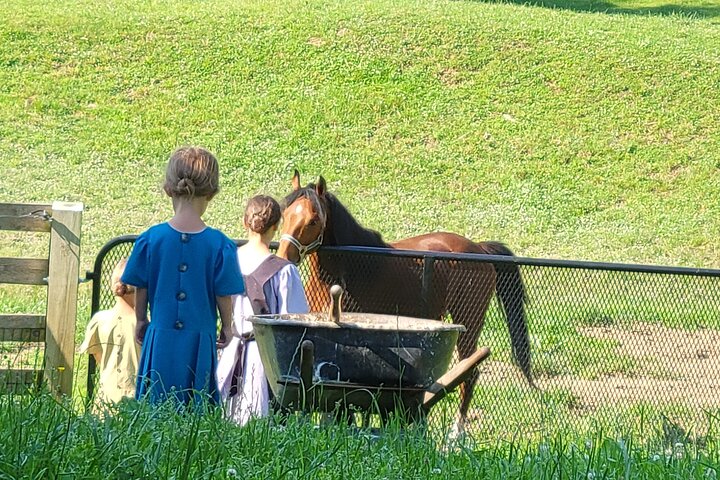
Drive Lancaster County's back roads on a weekday morning and you'll see them: children in straw hats and bonnets walking the shoulder toward small white schoolhouses with a bell on top and scooters parked outside. Those are Amish one-room schools — a parallel education system with its own logic, its own landmark Supreme Court case, and answers to questions most visitors are too shy to ask. Here's how it works.
The Basics
- One room, eight grades, one teacher — typically a young unmarried Amish woman, herself an eighth-grade graduate, teaching 25–35 children across all levels. Older students help younger ones; it's a feature, not a bug.
- The curriculum is reading, writing, arithmetic, geography, and German (for reading scripture) — taught in English, which for most children is a second language after Pennsylvania Dutch at home.
- Formal schooling ends at 8th grade, around age 14. After that, education continues — but as vocational apprenticeship at home and on the farm, learning the trades the community actually lives by.
Why 8th Grade? The Supreme Court Case
The endpoint isn't neglect — it's doctrine, and it's constitutionally protected. In Wisconsin v. Yoder (1972), the U.S. Supreme Court ruled unanimously that compelling Amish children into high school violated the free exercise of religion, accepting the community's argument that high school's values — competition, individual achievement, preparation for careers away from the community — would undermine the agrarian, faith-centered life the Amish raise children for. The Court noted what remains true in Lancaster County today: the system produces self-sufficient, law-abiding, economically productive citizens. Whether one agrees with the trade-off or not, it's one of the most consequential religious-liberty rulings in American history — and those white schoolhouses are its living result.
What Visitors Can See
- The schoolhouses themselves dot the farm roads between Bird-in-Hand, Intercourse, and Strasburg (the corridor guide) — recognizable by the bell, the ball field, and the row of scooters. They're active private schools: admire from the road, never enter the lane, and never photograph the children.
- Walk into a real one on a tour — the Amish Experience's small-group visit includes an actual one-room schoolhouse with a guide who explains the system properly:

- The replica schoolrooms at the Amish Farm and House and Amish Village let you sit in the desks and read the primers without intruding on a working school.
The Questions Everyone Asks
Do they learn enough? For the life they're preparing for — running farms and businesses that keep half this county fed and built — demonstrably yes. What about the kids who leave? Some do (the community retains the large majority); those who leave face real catch-up costs, which is the honest tension inside the Yoder trade-off. Is it legal in Pennsylvania? Fully — the state accommodated Amish schooling even before Yoder settled it nationally. It's a different answer to "what is education for," visible from the shoulder of every back road in the county — more of the question family in do the Amish pay taxes? and why no electricity?
Experiences That Include the Culture, Explained
Guides with lifelong community ties, farms, and the schoolhouse questions answered firsthand.